
Real SERP data, never estimates
Every number comes from an actual search made at an actual point on the map. If we did not measure it, we do not show it.
Measure Google Maps and organic visibility, map competitor coverage across an entire city, uncover market gaps hidden in customer reviews, and transform measured search results into clear, prioritized next steps.
Run a rank checkDecode the market. Dominate locally.
Local search is not static. Rankings change by keyword, geography and intent. A single search from one device cannot represent an entire market. DecodeLocal measures real search results so you can understand how visibility changes across a city before deciding what to optimize.
↖ measured, not modeledLocal search visibility is measured in four moves. RankCheck measures current Google Maps and organic rankings for a business. CitySweep maps competitor visibility across the city. GroundTruth analyzes competitor reviews and customer evidence for market gaps. Engine combines that measured evidence and prioritizes the local SEO actions that matter.
DecodeLocal is built on Measured Search Results
Four instruments, one measurement discipline: real searches, run at real points on the map, nothing modeled.
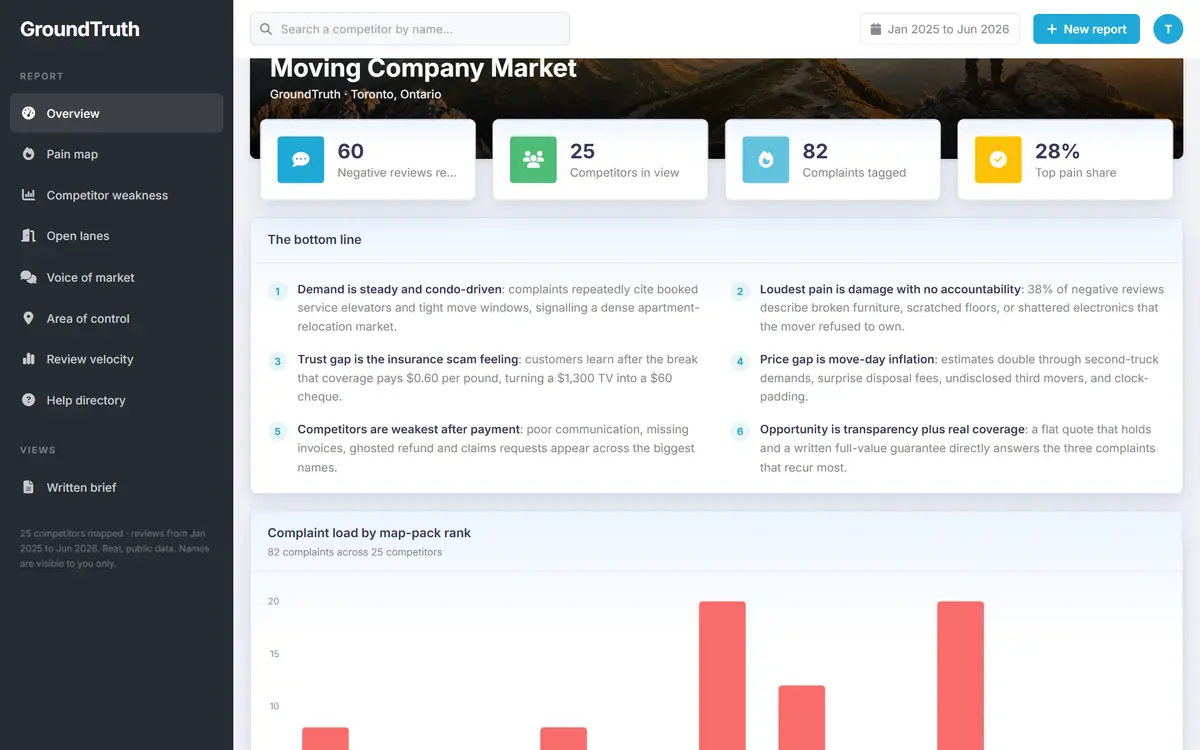
GroundTruth is the review intelligence and market research instrument. Point it at an industry and a city and it pulls the full review record of the market’s top competitors, reads it line by line, and writes up what the customers of that market actually reward and punish.
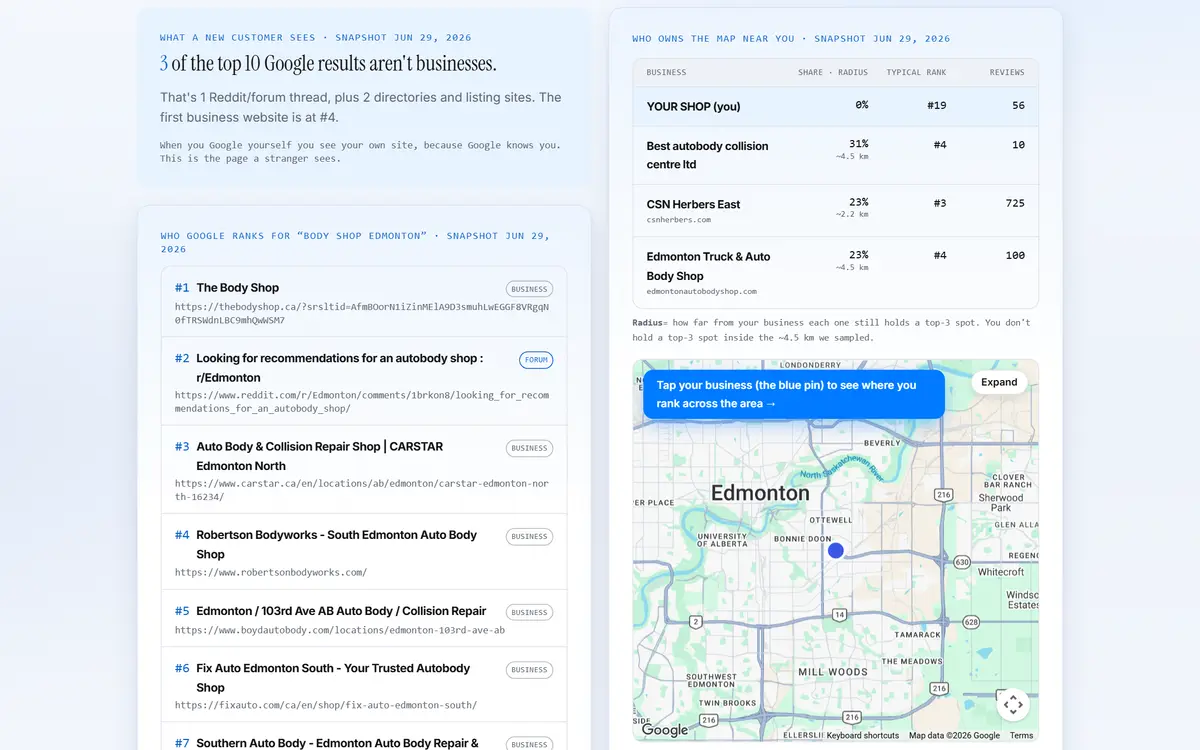
RankCheck is the local rank checker, $4.99 a run. Enter a business, a keyword, and a city and it reads the live Google results, both the map pack and the organic page, and returns a neutral snapshot of who outranks you and which lever moves your rank.
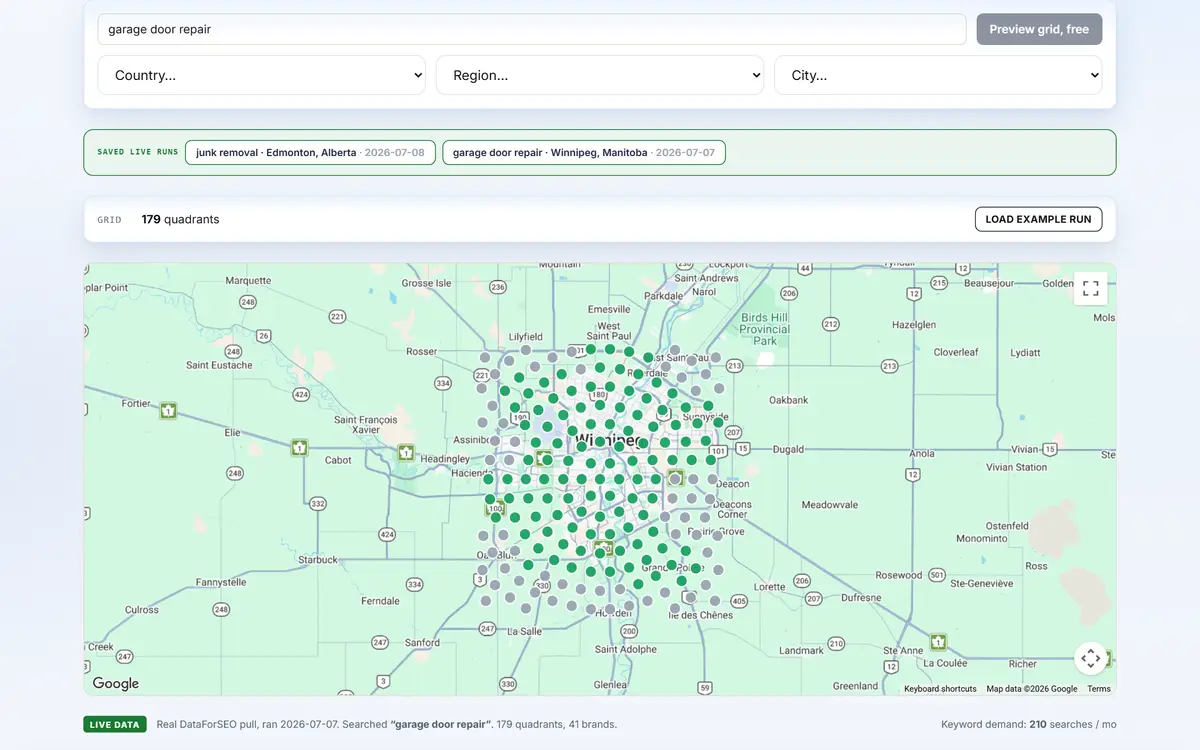
CitySweep is the geo grid rank tracker at full city scale: a local search grid fanned from the city core to its edges, with a real local pack read in every ring. One keyword, every quadrant, and the standings of every brand that shows up anywhere on the map.
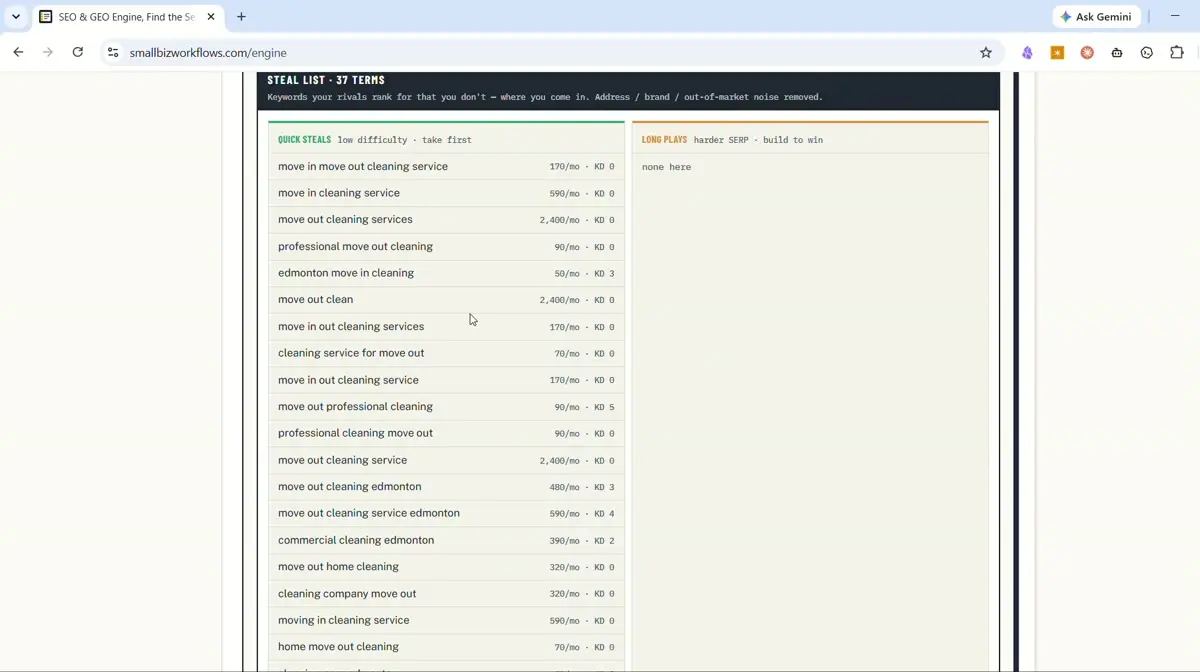
The Engine is where research becomes an outrank plan. It takes the grid readings and the review intelligence, sweeps the keyword footprint of the businesses above you, and hands back the battle plan: what to build, in what order, and why it wins.
Local search visibility is not one number. It includes Google Maps visibility and organic visibility, the competitor footprint that represents a business’s geographic coverage across a city, and the customer review record that holds the market’s evidence of what actually wins the work. DecodeLocal measures all four.
DecodeLocal serves local businesses that want to see their market the way Google actually shows it, and it serves local SEO agencies that need the same measurement repeated across dozens of clients. A single business owner runs RankCheck to see where they stand today. An agency runs CitySweepacross a full roster of client cities and hands GroundTruth’s review findings and Engine’s prioritized actions to its team.
Both start from the same measured evidence. Only the scale changes. See pricing for both a single business and a full client roster.
DecodeLocal operates in the United States and Canada, measuring local search markets in cities across both countries. The grid, the review record, and the rank check work the same way wherever the business sits, because the underlying measurement, real searches run from real points on the map, does not change at the border.
Most of what gets published about local SEO is modeled or estimated. DecodeLocal instead publishes original measurements: full city sweeps, real rank checks, and review records read line by line. See it applied at full scale in our Edmonton dentists local search visibility case study, a 483-query, 90-point geo-grid measurement of who owns Edmonton dentistry, and where. Read the write-ups in Insights, where every measurement behind a claim is shown, not just the conclusion.
Local SEO software is software that measures and analyzes local search visibility: Google Maps rankings, organic rankings, and the other localized search results a business shows up in for a given city or neighborhood. General SEO software tracks a single set of national rankings. Local SEO software has to account for the fact that the same keyword can return a different result depending on exactly where the search happens. DecodeLocal is built on that distinction: every tool measures a real point on the map rather than a single average.
Local SEO software is software that measures and analyzes local search visibility: Google Maps rankings, organic rankings, and the other localized search results a business shows up in for a given city or neighborhood. DecodeLocal is built on that measurement rather than an estimate of it.
It is measured by running real searches from real points on the map and reading the actual results, not by estimating from a single logged-in search. DecodeLocal measures Google Maps rankings and organic rankings at scale, across many points in a city.
Google Maps rankings are the local pack: the map and the business listings shown for a location-based search. Organic rankings are the standard web results beneath it. A business can rank well in one and poorly in the other, so both need to be measured separately.
Rankings change by keyword, by geography, and by search intent. A search from downtown can return a different set of businesses than the same search from the suburbs, because proximity is one of the factors Google uses to rank local results.
A market gap is a complaint or an unmet expectation that shows up repeatedly across a market's reviews but that no competitor has addressed. GroundTruth analyzes competitor reviews to identify these gaps.
Yes. RankCheck, CitySweep, GroundTruth, and Engine are used both by individual local businesses measuring their own market and by local SEO agencies repeating that measurement across a roster of clients.
Every number comes from an actual search made at an actual point on the map. If we did not measure it, we do not show it.
Logged-in Google shows every owner a different map. Reports here lead with numbers that do not move: directory counts, review gaps, neutral snapshots.
Billable sweeps sit behind hard ceilings and arm switches. Nothing fires a paid call without a deliberate decision.
Every claim in a client report is written so the owner can verify it themselves and reach the same conclusion.
The whole pipeline runs on one database, so nothing gets copied around and nothing falls out of date.
One form. The tools work out the grid, the radius, and the competitor set from there.
Real searches run across the map grid, quadrant by quadrant, and land in the database as evidence.
Rankings, reviews, directories, and competitor positions are scored into findings, not raw dumps.
A clean, client-ready page: what was measured, what it means, and what to do about it.
The client opens a live page, not a PDF. When the data updates, the page does too.
These tools got built because the reports we wanted to hand clients did not exist. Rank trackers averaged the city into a single number. Review tools counted stars without reading a word. Nothing measured the map the way an owner actually experiences it: standing at one corner, searching, and seeing who shows up.
So everything here starts from a point on the map and works up. Every claim in a report is one the owner can verify from their own phone.
One business, one keyword, one city. You get the neutral snapshot and the report page. The city has been talking this whole time.
Run a rank check